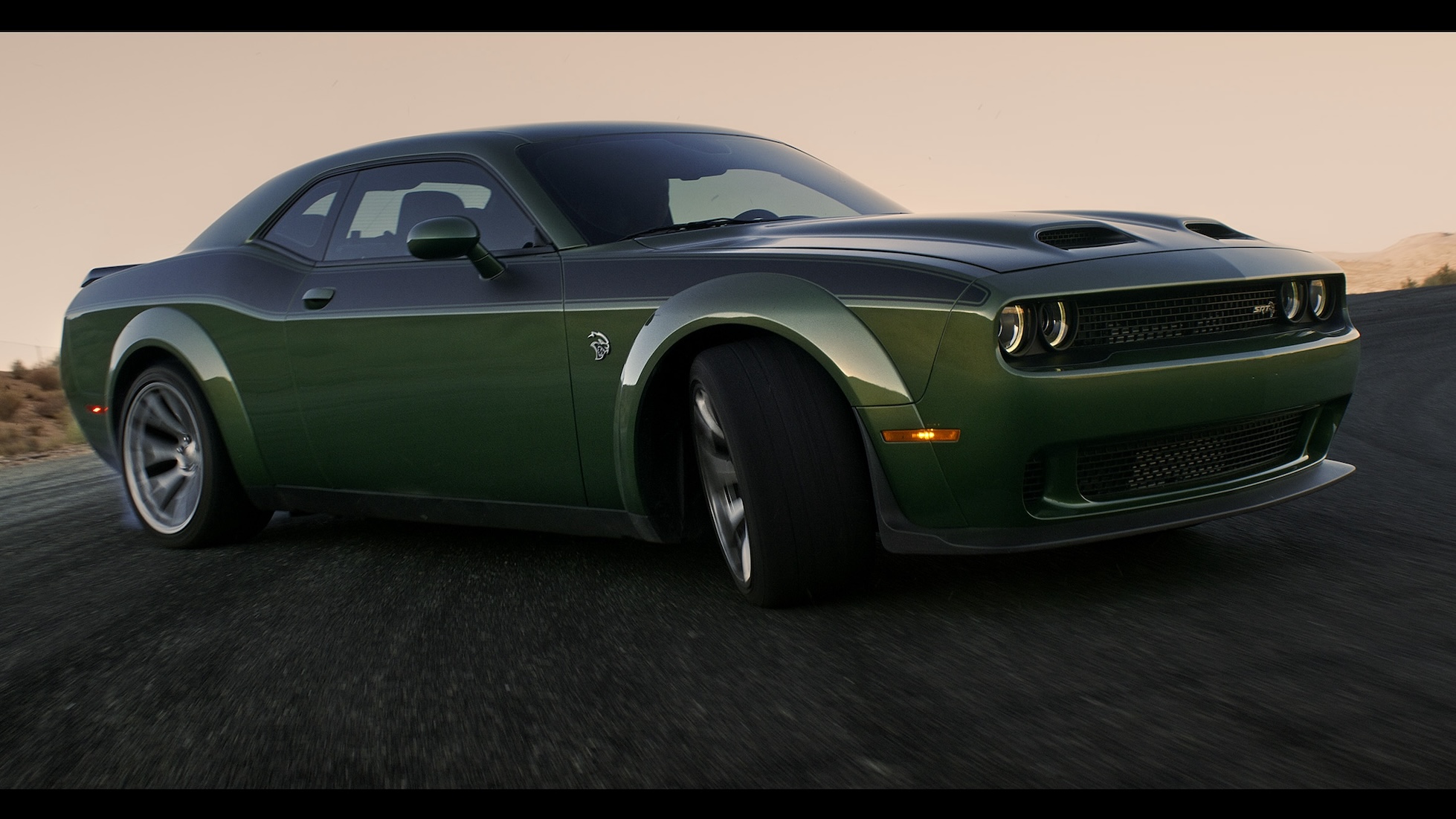
The Dodge Challenger, manufactured by American automaker Stellantis and built in North America since its modern reintroduction in 2008, represents a two-door muscle car that embodies raw American performance heritage. Available as a hardtop coupe with classic proportions, the Challenger sits on the LB architecture platform and continues its legacy as one of the most visually distinctive performance vehicles in the market. The 2026 Dodge Challenger stands as the ultimate expression of aggressive styling and substantial horsepower, delivering genuine muscle car credentials with available all-wheel drive capability that modernizes the classic formula.
History and Development
The Challenger nameplate traces its lineage back to the original 1970 model, when Dodge entered the muscle car arena with a direct competitor to the Chevrolet Camaro and Plymouth Barracuda. The modern Challenger revival began in 2008, recapturing the essence of that golden era while incorporating contemporary engineering and performance standards. Dodge positioned the Challenger as the straightforward choice for drivers seeking uncompromising power and distinctive styling without excessive complexity. The model has evolved through three generations, each building upon the previous generation's foundation while introducing technological refinements and powertrain innovations. The 2026 Challenger represents the culmination of this heritage, offering the most comprehensive feature set and performance capability the nameplate has ever delivered. Throughout its modern production run, the Challenger has maintained its core identity as a driver-focused muscle car with genuine personality. Early generations established the platform's capability, while successive updates introduced improved handling characteristics and more efficient powertrains. The Dodge Challenger price reflects its positioning as an accessible entry point to genuine American muscle car performance, with options spanning from naturally aspirated engines to legendary supercharged variants.
Exterior Design
The Challenger's design philosophy centers on aggressive proportions and a wide, planted stance that immediately communicates performance intent. The grille features a bold, prominent trapezoidal opening that dominates the front end, flanked by distinctive multi-element headlights that provide modern visibility while maintaining classic proportions. The hood stretches extensively forward, emphasizing the engine bay beneath and establishing a powerful front profile that recalls the original 1970 design language. Character lines run along the entire body side, creating muscular contours that enhance the visual impact whether stationary or in motion. The body profile maintains a low roofline relative to overall height, contributing to the aggressive stance that defines the Challenger's visual presence. Wheel arches sit squared off and muscular, accommodating substantial tire widths that enhance both grip and visual impact. The 2026 Challenger offers hardtop coupe configuration exclusively, with a rear quarter window treatment that balances classic styling cues with contemporary glass area. Available widebody packages expand the fender flares further, accommodating even wider track settings and creating an even more imposing presence on the road. The rear fascia features full-width taillights and a sculpted bumper design that emphasizes width and stability. Paint options range from traditional solid colors to striking metallic and matte finishes, with special editions featuring unique color combinations unavailable on other Dodge models. The Dodge Challenger price varies based on selected exterior packages, with performance-oriented visual upgrades commanding additional investment for customers seeking maximum aesthetic impact.
Dodge Challenger Performance and Engine Specifications
The Challenger delivers across an impressive range of powertrain options, beginning with a 3.6-liter V-8 producing 303 horsepower and 268 pound-feet of torque in naturally aspirated form. The mid-range 5.7-liter V-8 develops 370 horsepower and 395 pound-feet of torque, providing the accessible entry point to genuine V-8 performance that defines the Challenger experience. The flagship 6.2-liter supercharged V-8 produces an astounding 807 horsepower and 707 pound-feet of torque, establishing the Challenger as one of the most powerful naturally-aspirated-alternative vehicles available anywhere in the market. The main 5.7-liter variant achieves 0-60 mph in approximately 4.3 seconds, while the supercharged variant completes the sprint in under 3.6 seconds, reaching maximum velocity well beyond 190 mph. Real-world acceleration feel emphasizes dramatic throttle response and linear power delivery that rewards progressive inputs and full-throttle commitment equally. Engine technology incorporates variable valve timing and cylinder deactivation on naturally aspirated models, optimizing efficiency during highway cruising while preserving complete power availability during spirited acceleration. The supercharged 6.2-liter variant features intercooling to manage charge temperatures, ensuring consistent power delivery even during sustained performance driving. Transmission options include a conventional eight-speed automatic or available six-speed manual, each calibrated specifically for the selected engine variant. The Challenger prioritizes straightforward, mechanical performance character over electronic sophistication, maintaining the visceral connection between driver inputs and engine response. Fuel economy ranges from 16 city and 25 highway mpg on V-8 models, reflecting the substantial performance capability delivered. The 2026 Challenger price structure reflects these powertrain options, with the supercharged variant commanding premium pricing justified by the extraordinary horsepower and torque figures delivered.
Transmission and Drivetrain of the 2026 Dodge Challenger
The Challenger offers either an eight-speed torque-converter automatic transmission or a six-speed manual gearbox depending on selected variant and customer preference. The automatic transmission provides smooth, responsive gear changes during normal driving while enabling launch-control functionality during performance driving scenarios. The manual transmission appeals to enthusiast drivers seeking complete control over power delivery and engine rpm management throughout the acceleration range. Rear-wheel drive represents the standard and primary drivetrain configuration, with weight distribution and handling characteristics optimized around this traditional arrangement. All-wheel drive availability brings enhanced traction management, distributing power to both front and rear wheels during acceleration and providing improved stability during adverse weather conditions. The all-wheel drive system employs continuous transfer case engagement, sending the majority of power rearward while maintaining constant front axle engagement. Electronic stability control functions continuously, providing traction management assistance during acceleration and cornering without excessive intervention during normal driving conditions. The Challenger employs conventional coil spring suspension with double-wishbone front geometry and solid rear axle with multi-link geometry, prioritizing simplicity and straightforward handling characteristics. Performance-oriented suspension packages offer adaptive damping and reduced ride height, enabling spirited cornering and aggressive driving character when demanded. The rear axle incorporates electronic locking differential functionality on performance variants, improving traction during aggressive acceleration and enabling precise power distribution management. Steering feel remains direct and communicative, with electronic power steering providing consistent effort throughout the entire turning range.
Interior Comfort and Cabin Technology of the Dodge Challenger 2026
The Challenger cabin emphasizes traditional muscle car proportions with a driver-centric layout that positions all major controls within arm's reach. The dashboard features a straightforward design with large, easy-to-read analog gauges complemented by a digital information display. High-quality materials dominate the upper dashboard and door panels, with soft-touch surfaces and contrast stitching reflecting quality craftsmanship throughout. Seating accommodates two adults comfortably with supportive bolstering that maintains proper positioning during spirited cornering and aggressive acceleration. Front seats offer extensive power adjustment including lumbar support, heating, and cooling functions on higher-trim variants. The back seats provide minimal usable passenger space, reflecting the Challenger's genuine two-plus-two seating arrangement and performance-oriented design philosophy. Interior storage includes a conventional center console with divided compartments and cup holders, plus door pockets providing convenient access during daily driving. The infotainment system features an available touchscreen display ranging from 7.0 to 8.4 inches depending on trim selection, providing access to navigation, entertainment, and vehicle settings. Apple CarPlay and Android Auto smartphone integration enables wireless or wired connectivity with compatible devices, expanding available entertainment options. The digital instrument cluster provides customizable display themes and function selection, allowing personalization of information presentation. Audio system options range from an adequate standard setup through an available premium component system with enhanced amplification and speaker count. Climate control employs conventional two-zone automatic temperature management, maintaining independent left and right temperature settings. The Dodge Challenger price reflects these cabin amenities, with premium content packages adding heated and ventilated seating, premium audio systems, and advanced infotainment functionality.
Safety Technology in the Dodge Challenger 2026
The Challenger arrives equipped with standard safety features including dual front airbags, side-impact airbags, and rollover protection curtain airbags positioned throughout the cabin. Electronic stability control integrates with the braking system to provide traction management assistance during acceleration and emergency maneuvers. Anti-lock braking prevents wheel lockup during hard braking, maintaining steering control and enabling shorter stopping distances. Forward collision warning with automatic emergency braking provides audible and visual alerts when potential frontal impacts are detected, applying braking force when unavoidable. The body structure employs high-strength steel throughout the passenger compartment, with crumple zones engineered to absorb impact energy while protecting occupant space. Three-point seat belts with automatic tensioning and load-limiting features secure all seating positions, providing optimal restraint during frontal, side, and rear impacts. Child safety seat anchors enable secure installation of rear-facing and forward-facing safety restraints on the rear seats. Rearview camera with display guidance assists backing maneuvers and provides video verification of rear area clearance. Blind spot monitoring with cross-traffic detection alert warns of vehicles approaching from sides or rear areas obscured from driver visibility. Parking sensors provide distance information during parking maneuvers, assisting in tight-space maneuvering. The National Highway Traffic Safety Administration awarded the Challenger respectable crash test ratings, acknowledging the platform's protective design and safety system integration. Rollover resistance testing confirms the wide stance and low center of gravity provide inherent stability protection.
The Enduring Legacy and Lasting Appeal of the Dodge Challenger
The Dodge Challenger has established itself as the straightforward answer for drivers seeking genuine American muscle car performance without unnecessary complexity or compromise. The vehicle delivers what customers expect: dramatic styling, substantial horsepower, and mechanical simplicity that encourages ownership satisfaction and engagement. Compared against competitors like the Chevrolet Camaro and Ford Mustang, the Challenger emphasizes a wider body, more aggressive stance, and less electronically mediated power delivery, appealing to drivers valuing traditional performance character. The 2026 Challenger price positions the model as an accessible entry point to genuine performance, with upgrade options allowing customization of capability and appearance to suit individual preference. Dodge has maintained consistent design language and engineering philosophy throughout the modern Challenger's lifecycle, building customer loyalty and establishing clear market positioning. The model's sustained popularity demonstrates the enduring appeal of straightforward, powerful, driver-focused vehicles in an increasingly complex automotive landscape. Interior quality and durability reflect Dodge's commitment to authentic craftsmanship suitable for long-term ownership. The Challenger's performance credentials and distinctive styling create a vehicle that commands attention and delivers genuine excitement during every driving experience, establishing its position as an icon of American automotive enthusiasm and performance heritage.
Read more